Sharp context for a fast-moving world
Signal-first coverage across politics, markets, technology and climate, curated for readers who want clarity in minutes.
Dräger Safety UK to build new North East facility in multimillion-pound expansion
Major Northumberland employer Dräger Safety UK is set to build a new North East facility as part of a multimillion-pound expansion plan. The owner of the safety and medical technology specialist has announced it is in talks to acquire land for a new base close to its existing Northumberland plant, which employs 450 people. Dräger bosses said a number of locations are being considered which are close to the existing facility at Blyth Riverside Business Park, to make sure the company can retain the skills and experience of its existing staff, many of whom have worked with Dräger in Northumberland for many years. The Blyth base, which marked 60 years of business last year, designs and manufactures breathing apparatus and gas detectors and is also home to the headquarters of the company’s safety division in the UK, as well as sales, service and support functions. The board has said that the new facility will also be significantly bigger than the current site. However, while Dräger says its existing Blyth site “will remain in use for the immediate future”, it has yet to confirm if the new site will become a second North East base or a replacement for its current operations. The company said: “The Dräger Group has been operating in Blyth for more than 60 years. Although the current site, which the business owns, has been expanded during this time, it has now reached its capacity and further expansion is constrained due to its location. It has therefore become clear that a larger site is needed to accommodate the company’s predicted growth.” Work is now under way to develop more detailed plans and to select a final site for the potential new facility, which it is hoped will accommodate research and development, manufacturing, sales, service and support. The firm said more details on the plans are expected to be announced in the coming months. Malcolm Irving, Dräger’s head of global supply chain management, safety division and managing director, safety division UK & Ireland, said: “Today’s announcement is the culmination of over 18 months’ work to determine the best long-term future for the business in the UK, and I am delighted to be able to reaffirm our commitment to the North East. The new plans seek to enable the expansion of our operations in line with our anticipated growth projections over the coming years. “Ensuring that we retain the skills and experience of our exceptionally committed and talented staff, many of whom have worked with Dräger here in Northumberland for many years, was instrumental in our decision to not only remain, but to further invest, in the North East over the coming years.” Draeger Safety UK forms part of the wider Dräger Group, a family company launched in 1889 with over 16,000 employees in 50 countries, specialising in safety products for the utilities, oil and gas, renewable energy, emergency services and manufacturing sectors. Stefan Dräger, chairman of the executive board, who is the fifth generation of the Dräger family to run the business, added: “This decision endorses our confidence in the UK for future business. Our site in the North East of England is an integral part of our global operations function.
Bristol engineering group rescues collapsed Nottinghamshire firm
A Bristol manufacturer has agreed a deal to rescue a Nottinghamshire business that collapsed into administration last month. Avon Group, an £80m turnover engineering group, has acquired specialist automotive component manufacturer Interflex. The deal will see the Bristol company take on the trade, assets and staff of the £8m turnover business. Interflex, which manufactures seals and acoustic protection products for the automotive sector, went into administration on February 28 after struggling to recover from the pandemic and the subsequent "volatility" of the automotive sector. Avon Group already operates a similar larger business in the West Midlands and shares some of its customers. “Our business has huge synergies with Interflex,” said Steve Thomas, Avon Group’s sales director. “The management team and staff at Interflex will bring additional engineering skills and capability to our group that will propel our automotive business forward at an even faster pace. "We are already making significant inroads with clever products for electric vehicles and are eyeing-up the opportunities presented by the new battery plant being built in Somerset. This acquisition is not only good news for Interflex but good news for our group as a whole, as we continue to expand."
Top Stories


From Recovery to Resilience in Puerto Rico: Five Key Takeaways
David Jones
The people of Puerto Rico have endured significant losses in recent years due to climate change- induced disasters, including Hurricanes Maria and Irma. From frequent storms that accelerate flooding to heat waves that make everyday tasks challenging, stakeholders across Puerto Rico continue to pursue innovative strategies to rebuild, recover, and ensure that the lowest-income households are not left behind in the aftermath of extreme weather events.Puerto Rico’s commitment to community-driven solutions was palpable when Enterprise, LISC, and the Federal Reserve Bank of New York capped off 2024 with an event in San Juan that gathered housing and climate experts working on both the Island and the mainland.The event, “Recovery to Resilience: Collaborative Solutions for a Sustainable Puerto Rico,” highlighted strategies and initiatives from the book What’s Possible: Investing NOW for Prosperous, Sustainable Neighborhoods, as well as programs and innovations led by the Puerto Rico Department of Housing, HUD, Acacia Network, Marvel Architects, Inclusiv, Barrio Electrico, Center for a New Economy, and other organizations.ImageEnterprise Advisors' Erika Ruiz (r) and Enterprise Solutions President Jacqueline Waggoner open the eventEnterprise’s collaboration with housing and community leaders in Puerto Rico dates back to 2001, when we helped finance 158 affordable homes through the Low-Income Housing Tax Credit. Since 2012, Enterprise Advisors has provided technical assistance to local partners and advanced funding opportunities on the Island, further expanding our work after the 2017 hurricanes. This effort, led by Erika Ruiz, senior director at Enterprise Advisors, has developed trust and fostered partnerships with the goal of helping build resilient and equitable communities.The event featured panel discussions and presentations as well as a fireside chat between Enterprise CEO and President Shaun Donovan and LISC President and CEO Michael T. Pugh, moderated by Madeline Fraser Cook, SVP of Community Building and Resilient Solutions at LISC. Their conversation explored the impact of the What’s Possible book and the housing and economic development work needed to build a more sustainable Puerto Rico.“People understand that their homes and their communities are changing, and that we must change along with that,” said Donovan. “So this is a moment of opportunity for this book and the work that it represents to really change practices across the nation and across the globe.” Like Donovan, Pugh emphasized the importance of prioritizing communities with lower incomes: “We've got to be responsive to the communities that will be hit the hardest and have the slowest recovery, in order to help ensure they have a real chance at navigating through this difficult time.”ImagePuerto Rico Disaster Recovery Deputy Secretary Maretzie Díaz (l) shares the stage with HUD Disaster Recovery Coordinating Officer Laura Rivera-CarrionWhile the event speakers highlighted a range of topics, they underscored five common themes key to building on resilience and recovery efforts in Puerto Rico.1. CollaborationPartnerships across nonprofits, government agencies, banks/community-based lenders, and private organizations are necessary for strengthening and preparing Puerto Rico for future climate disasters. Panelists highlighted the representation of organizations and entities from across the Island at the event as an example of the range of sectors that must unite to help Puerto Rico fully recover from the devastation of the most recent hurricanes, as well as to ensure that households across the Island are prepared for future extreme weather events. Increased collaboration will allow every organization to bring their strengths to the table, share best practices, and work together to address the climate challenges.ImageFederal Reserve Bank of New York's Javier Silva and LISC's Madeline Fraser Cook2. PreparationSpeakers emphasized the critical need for Puerto Rico to enhance its preparedness for future climate disasters. Preparation for the growing frequency and intensity of extreme weather events – particularly those exacerbating flooding – requires public education to raise awareness of risks, proactive planning to identify vulnerable critical infrastructure like communications and electricity systems, and fortifying homes and structures across the Island to withstand future disasters.3. Climate AdaptabilityGiven the unpredictable nature of climate disasters, adaptability is essential for housing and climate stakeholders in Puerto Rico to effectively address emerging challenges and build resilience. It is crucial for municipalities and government agencies across the Island to prepare community members for climate hazards and reduce vulnerability by implementing local level changes that ease existing impacts of climate disasters and manage the risks of disasters to come.ImageMichelle Sugden-Castillo (l) moderates panel on Trauma-Informed Design with architect Jonathan Marvel; Dharma Cortés, Harvard; and Acacia Network's Lymaris Albors4. People-Centered Resilience Planning Prioritizing families who are harmed and displaced when disaster strikes in Puerto Rico was a common thread across all event panels and presentations. Panelists discussed involving community members in the development of climate resilience and recovery plans, as well as offering them solutions that go beyond replacing homes with more resilient structures and also help people heal from the trauma of surviving a disaster.5. Financial InvestmentsWithout public and private investments, innovative solutions, necessary preparation, adaptability, and other resilience building efforts would be impossible. Speakers throughout the event discussed the need for increased funding through the Inflation Reduction Act, Community Development Block Grant – Disaster Recovery (CDBG-DR) allocations, and other sources of federal funds committed to climate resilience. Additionally, panelists highlighted the impact of community development credit unions, or cooperativas, and their ability to drive investments directly to the individuals and families most impacted by disasters.Find more inspiring examples of practical climate and community development solutions that create an equitable path to building strong and resilient communities inWhat’s Possible.Related Topics:ResilienceClimate Risk ReductionAdvisory Services and Technical AssistanceU.S. Caribbean

Gen Zers are flocking to these Midwest housing markets where homes are about 30% cheaper than the coasts
Michael Brown
Younger generations are looking to the Midwest for homeownershipbecause of the region’s significantly lower housing costs compared to major coastal cities. Many Midwest metros have median home prices well below the national average, while also offering a lower cost of living. As a result, some Midwest cities have higher rates of young homeowners.Younger generations are typically associated with wanting to live a big-city lifestyle, but the high cost of housing on the coasts is driving Gen Z to consider other options. Recommended VideoThe Midwest is becoming a more attractive place to plant roots, considering housing costs there can be at least 30% cheaper than living in major coastal metros like New York City or Los Angeles. In fact, seven out of the 10 most accessible metros for young homeowners are in the Midwest, according to a ConsumerAffairs’ analysis of U.S. Census Bureau and Federal Financial Institutions Examination Council (FFIEC) data published July 29. The Midwest cities with the highest rates of homeownership under age 35 include: Omaha, Nebraska (18.2%)Grand Rapids, Michigan (21.1%)Des Moines, Iowa (19.8%)Wichita, Kansas (18.4%)Cincinnati, Ohio (17%)Minneapolis, Minnesota (16.5%)Akron, Ohio (14.2%)Minneapolis is also considered as one of the most affordable places to live, according to Zillow, along with other Midwest cities like St. Louis, Detroit, Indianapolis, Cleveland, Cincinnati, and Kansas City. All of these are cities where half or more of the homes for sale are considered affordable, according to Zillow, meaning housing consumes less than 30% of a typical household’s budget. Median home prices in many Midwest cities hover around $200,000 to $275,000, while the national median has crossed $400,000, Danielle Andrews, a realtor with Realty One Group Next Generation, toldFortune.That price gap can cut monthly housing costs by 30% to 50%, even before factoring in lower property taxes and insurance, she added. Why Gen Z is movingDuring the pandemic, many professionals moved to locations with more appealing weather and amenities while working from home. But now that many workers have been forced back to the office and housing costs have continued to rise, those cities don’t always make financial sense for homeowners anymore. Andrews said she’s worked with several Gen Z buyers—especially remote workers and young professionals—who are leaving higher-cost areas like Florida for more affordable housing.“For many, it’s not just about cheaper homes, but about being able to build wealth earlier without drowning in overhead,” Andrews said. She also cited a StorageCafe statistic showing Gen Z and millennials made up nearly 30% of all interstate movers, with states like Indiana and Wisconsin seeing some of the biggest gains. A Realtor.com analysis published Tuesday also shows suburban zip codes in the Midwest are heating up in 2025, meaning they’re getting attention through a mix of lifestyle appeal, relative affordability, and strong ties to nearby economic hubs.“The Northeast and Midwest dominate, driven by buyers from high-cost metros looking for relief without sacrificing access to jobs and amenities,” Realtor.com chief economist Danielle Hale said in a statement. “Many of these neighborhoods also offer newer homes than the surrounding areas, highlighting the critical role of new and infill construction in meeting today’s buyer demand—even in a tough market.”In its analysis of interest in areas that offer more space, more access to jobs, and better value, Realtor.com found that three of the 10 hottest zip codes are in the Midwest cities of Ballwin, Mo.; Strongsville, Ohio; and Bexley, Ohio. While these three cities have higher prices than their respective larger metro areas, their price points remain moderate on a national scale. Although home prices in the Midwest are rising, the region continues to be the most affordable homebuying region in the country, according to Redfin. Take Detroit, which has the lowest median sales price of any major metro at $180,000, Redfin data shows, or Cleveland at about $217,000. Both of these cities’ median home prices are roughly half of the overall U.S. figure. “Importantly, the cost of living [in the Midwest], especially for essentials like groceries, gas, and health care, is better aligned with local wages, allowing Gen Z buyers to not just get by—but actually get ahead,” Andrews said. “The Midwest is no longer just affordable: It’s aspirational for a generation redefining success.”Join us at the Fortune Workplace Innovation SummitMay 19–20, 2026, in Atlanta. The next era of workplace innovation is here—and the old playbook is being rewritten. At this exclusive, high-energy event, the world’s most innovative leaders will convene to explore how AI, humanity, and strategy converge to redefine, again, the future of work. Register now.

30-year mortgage rate holds steady at lowest level in nearly 10 months
Robert Johnson
The average rate on a 30-year U.S. mortgage held steady this week at its lowest level in nearly 10 months, an encouraging sign for prospective homebuyers who have been held back by stubbornly high home financing costs.Recommended VideoThe long-term rate was unchanged from last week at 6.58%, mortgage buyer Freddie Mac said Thursday. A year ago, the rate averaged 6.46%.Borrowing costs on 15-year fixed-rate mortgages, popular with homeowners refinancing their home loans, edged lower. The average rate dropped to 5.69% from 5.71% last week. A year ago, it was 5.62%, Freddie Mac said.Stubbornly high mortgage rates have helped keep the U.S. housing market in a sales slump since early 2022, when rates started to climb from the rock-bottom lows they reached during the pandemic. Home sales sank last year to their lowest level in nearly 30 years and have remained sluggish this year.For much of the year, the average rate on a 30-year mortgage has hovered relatively close to its 2025 high of just above 7%, set in mid-January. Since last week, the average rate has been at its lowest level since Oct. 24, when it averaged 6.54%.Mortgage rates are influenced by several factors, from the Federal Reserve’s interest rate policy decisions to bond market investors’ expectations for the economy and inflation.The main barometer is the 10-year Treasury yield, which lenders use as a guide to pricing home loans. The yield was at 4.34% at midday Thursday, up from 4.29% late Wednesday.The yield has been mostly rising this month as bond traders weighed how data on inflation and the job market, and the potential economic impact of Trump administration’s tariffs, may influence the Fed’s interest rate policy moves.The central bank has so far been hesitant to cut interest rates out of fear that Trump’s tariffs could push inflation higher, but data showing hiring slowed last month have fueled speculation that the Fed will cut its main short-term interest rate next month.A Fed rate cut could give the job market and overall economy a boost, but it could also fuel inflation, which could push bond yields higher, driving mortgage rates upward in turn.“Even if the Fed cuts the short-term federal funds rate in September, which is largely expected, it is not likely that we will see a big drop in mortgage rates,” said Lisa Sturtevant, chief economist at Bright MLS.Economists generally expect the average rate on a 30-year mortgage to remain near the mid-6% range this year.That may not be low enough to spur a meaningful increase in home sales.While the housing market slowdown is forcing many sellers to lower their asking price and even pay for a buyer’s closing costs, among other incentives, affordability remains a major hurdle for many aspiring homeowners.Home price growth has slowed nationally, but the median sales price of a previously occupied U.S. home remains near the all-time high of $435,300 set in June. And while prices are down from a year ago in many metro areas in the South and West such as Miami, Denver and Austin, they haven’t come down nearly enough to offset years of soaring prices.“Lower mortgage rates and slower price growth — or even year-over-year price declines — is going to be necessary to improve affordability and bring more homebuyers into the market,” Sturtevant said.Join us at the Fortune Workplace Innovation SummitMay 19–20, 2026, in Atlanta. The next era of workplace innovation is here—and the old playbook is being rewritten. At this exclusive, high-energy event, the world’s most innovative leaders will convene to explore how AI, humanity, and strategy converge to redefine, again, the future of work. Register now.

Florida’s housing market was skewed wildly by the pandemic. It’s finally coming to grips with a ‘realistic middle ground’
Jane Smith
The housing market in Florida is in the midst of a major change: Inventory is down for the first time in 110 weeks, according to Compass chief economist Mike Simonsen. But it’s not for the reason you might think.Recommended VideoFlorida’s housing market was one of the hottest during the pandemic due to the state’s appeal to remote workers, retirees, and investors who relocated from high-cost states like New York and California seeking more space, lower taxes, and lenient COVID restrictions. Between March 2020 and June 2022, prices rose a whopping 51%. Demand was high, so inventory was low. But now, Florida’s inventory levels are dwindling for a very different reason. Experts say that it’s not revived demand, but rampant delistings and fewer new listings that are causing the change. Home prices are down about 5.4% year over year, according to Zillowdata. “Low prices and low demand are making people who aren’t in a hurry simply withdraw listings rather than sell at a low price,” Alexei Morgado, a Florida real estate agent and founder of real-estate exam prep company Lexawise, toldFortune. “Inventory is down, but not because of big sales, but rather because of [delistings] and slow demand. So it’s all a mixed bag.”Realtor.com data for August show some parts of Florida saw nearly 60 homes delisted for every 100 newly listed homes. Miami had the highest delisting-to-listing ratio with about 59, while Tampa had 33 and Orlando had 28.Overall, the number of single-family homes for sale in Florida fell from more than 100,000 in the spring to about 96,000, after years of rapid growth, according to Simonsen, who is also the founder and president of real-estate analytics firm Altos Research. This downward trend is a signal the market is “clearing out” the would-be sellers, Jenna Stauffer, a Florida-based real-estate broker and global real estate advisor for Sotheby’s International Realty, toldFortune.The ones who needed to sell have most likely already done so, even if it meant lowering prices or offering concessions. Stauffer said the pullback is “healthy,” though, because it helps reset home prices and balances out supply and demand. “It also shows that sellers are becoming more in tune with market conditions,” she said. Is the Florida housing market crashing or correcting?While experts say Florida’s housing market is experiencing some major changes, they aren’t indicative of a crash—which would be a swift and severe decline in prices driven by an imbalance of supply and demand.Rather, experts say the trend of inventory declines is a sign the Florida housing market is correcting itself. “Higher inventory had been putting downward pressure on prices and giving buyers the upper hand,” Stauffer said. “Buyers had so many options, no urgency and plenty of time to negotiate.”But now that inventory is tightening, the dynamic could start to shift, she said, because buyers will lose a little bit of that leverage they had and sellers could regain “a little” power. Stauffer also said it’s “not a crash in Florida, but a reset.” Sellers “have to recognize that this is a different market than a few years ago,” she added. “Demand isn’t the same and supply isn’t the same. It’s forcing everyone to a more realistic middle ground.”And for that reason, it may not be the best time to sell your home in Florida, Morgado said—but it could be the right time to make a purchase.“You can sell if necessary, of course, but wait if you can,” he said. “And for buying: You can get [a] good price, with lower rates and discounts, so take advantage of [that] now.”Join us at the Fortune Workplace Innovation SummitMay 19–20, 2026, in Atlanta. The next era of workplace innovation is here—and the old playbook is being rewritten. At this exclusive, high-energy event, the world’s most innovative leaders will convene to explore how AI, humanity, and strategy converge to redefine, again, the future of work. Register now.
From Recovery to Resilience in Puerto Rico: Five Key Takeaways
David Jones
Gen Zers are flocking to these Midwest housing markets where homes are about 30% cheaper than the coasts
Michael Brown
30-year mortgage rate holds steady at lowest level in nearly 10 months
Robert Johnson
Florida’s housing market was skewed wildly by the pandemic. It’s finally coming to grips with a ‘realistic middle ground’
Jane Smith
In-Depth
Showing What's Possible: The Genesis of Green Communities
John Jones

Missing Middle: 3 Ways to Scale Low-density Multifamily Housing
Robert Miller
Caravan manufacturer Erwin Hymer sees losses grow amid difficult market

‘Quiet luxury’ is coming for the housing market, The Corcoran Group CEO says. It’s not just the Hamptons, Aspen, and Miami anymore
John Jones

Wheel maker BIL Group buys Varley Castors to create largest group of its kind in the UK

California Final Budget Restores Key Affordable Housing Funds
Emily Brown

Bristol entrepreneurs launch 'world's most sustainable' bedside crib
Three Bristolian entrepreneurs are hoping to revolutionise the baby market in Britain with “the world’s most sustainable crib”. Mike Hoffman, Nina Szamocki and Angus Whiston, who met at Cambridge University, established furniture company Alora Baby in 2023 in Fishponds. The trio have spent the past year creating an eco-friendly bedside cot that can be sold back to the company after use and the materials remanufactured into brand new cribs. The founders were inspired to set up the business after discovering how many baby products are sent to landfill each year. “The baby market is notoriously wasteful - with many products being used for a short period,” Mr Whiston told BusinessLive. “The Alora Baby Crib is the world’s first baby product manufactured under the principles of the circular economy - meaning raw materials get reused in new iterations of the product for as long as possible. “The circular economy is a revolution for the baby market - allowing for a truly win-win situation: a high-quality, completely new, UK-made product which is radically better for the environment.” The founders came up with the idea in January last year and spent around 11 months working with a product designer to develop the cot. The trio also secured funding from Innovate UK to help with the business. The cots are manufactured in Bristol and delivered nearly fully assembled. Once customers have finished using the crib they can sell it back to Alora under the company's buy-back scheme. The cot is then collected by the firm and taken apart after which it undergoes a series of industrial processes to fully remanufacture it into an entirely new cot. “Unfortunately we still live in a horrid ‘landfill economy', where products are designed to be thrown away and are poorly built to match," said Ms Szamocki. "You don’t even have to be environmentally driven to realise that this is a horribly inefficient system. With Alora, we’re changing the game and turning this system on its head.” LIKE THIS STORY? Why not sign up to get the latest South West business news straight to your inbox. Alora, which launched at the UK Baby Show in London in March, told BusinessLive it is hoping to develop more environmentally friendly products in the future - and has plans to grow the business in the next 12 months, including hiring staff to join the firm.

Steel firm goes into administration with dozens of jobs lost
A steel firm has closed with the loss of dozens of jobs after going into administration. Atlantic Steel Processing, based on the dockside in Birkenhead, called in administrators from FRP Advisory after suffering a fall in sales and after an attempt to sell the company fell through. The business has now closed and most of its 41 staff have now lost their jobs. The 23-year-old business supplied steel products across the UK and Ireland. It specialised in steel decoiling, taking rolled steel and uncoiling it to press it into flat sheets so it could be used in industry. The company called itself the only steel processor of its kind inside a port with direct access to a quay, and boasted “the world’s widest decoiling line” at its base in Vittoria Dock. Richard Goodall and Martyn Rickels, of specialist business advisory firm FRP Advisory, were appointed as joint administrators on May 3. They said: “The company faced challenging trading conditions primarily due to a reduction in demand which resulted in cash flow difficulties and impacted its ability to operate.” "After an accelerated M&A process yielded no transacting partners for a going concern sale, the Company ceased trading and was placed into administration as part of an orderly wind down." FRP said most employees were made redundant soon after administration “with a small number retained temporarily to assist the joint administrators with the wind-down process”. The remaining assets of the business are being sold by property agency Sanderson Weatherall. Richard Goodall, director at FRP, said: “Unfortunately, mounting external pressures, most notably a reduction in demand and movements in commodity prices, resulted in the business being unable to meet its financial obligations. Regrettably, this meant the necessary closure of the business. “We are now supporting the employees affected to file claims with the Redundancy Payments Services and would encourage any parties with an interest in acquiring the assets to make contact with us as soon as possible.”

Gloucestershire manufacturer rescues engineering firm from administration
A Gloucestershire manufacturing firm has acquired a Lancashire-based business from administration for an undisclosed sum. Tewkesbury's Geometric Manufacturing, a provider of mechanical components to the defence and security industry, has taken over Precision Engineering Pieces (PEP) - a sheet metal and fabrication company. PEP, which is registered in Chorley and also has a unit at Ashchurch Business Centre in Tewkesbury, appointed administrators from advisory firm Interpath on March 21. The acquisition includes PEP's entire business and assets, including its equipment, staff and customer base. "This strategic move strengthens Geometric's position within the industry by adding complementary capabilities, improving supply chain integration and enhancing our product offerings," Geometric said in a statement. Geometric now occupies over 50,000 sq ft of industrial space across three sites in the Tewkesbury area, with a customer base across the UK. “We are committed to providing a seamless transition for Precision Engineering Pieces employees and customers,” said Paul Wenham, managing director at Geometric Manufacturing. “This acquisition secures jobs and preserves over 40 years of excellence in the sheet metal fabrication sector. We are excited to welcome PEP's talented team and their expertise.”

Existing home sales inch up in July on modest pullback in mortgage rates
Sarah Brown
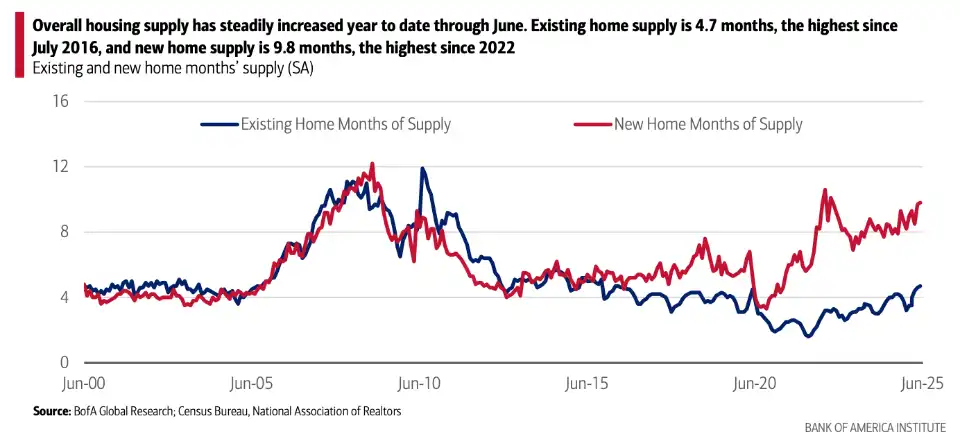
Sales of previously occupied U.S. homes rose in July as homebuyers were encouraged by a modest pullback in mortgage rates, slowing home price growth and the most properties on the market in over five years.Recommended VideoExisting home sales rose 2% last month from June to a seasonally adjusted annual rate of 4.01 million units, the National Association of Realtors said Thursday.Sales edged up 0.8% compared with July last year. The latest sales figure topped the 3.92 million pace economists were expecting, according to FactSet.Home prices rose on an annual basis for the 25th consecutive month, although the rate of growth continued to slow. The national median sales price inched up just 0.2% in July from a year earlier to $422,400.That was the smallest annual increase since June 2023. Even so, the median home sales price last month is the highest for any previous July, based on data going back to 1999.“The ever-so-slight improvement in housing affordability is inching up home sales,” said Lawrence Yun, NAR’s chief economist. “Wage growth is now comfortably outpacing home price growth, and buyers have more choices.”The U.S. housing market has been in a sales slump since 2022, when mortgage rates began climbing from historic lows. Sales of previously occupied U.S. homes sank last year to their lowest level in nearly 30 years.This year’s spring homebuying season, which is traditionally the busiest period of the year for the housing market, was a bust as stubbornly high mortgage rates put off many prospective homebuyers. Affordability remains a dauting challenge for most aspiring homeowners following years of skyrocketing home prices.First-time homebuyers, who don’t have home equity gains to put toward a new home purchase, accounted for 28% of homes sales last month, down from 30% in June, NAR said. Historically, they made up 40% of home sales.The average rate on a 30-year mortgage has remained elevated this year, although it has been at a nearly 10-month low of 6.58% the last two weeks.Homes purchased last month likely went under contract in May and June, when the average rate ranged from 6.76% to 6.89%. Mortgage rates eased in July, dropping briefly to 6.67%.As home sales have slowed, the number of unsold homes on the market has been rising.There were 1.55 million unsold homes at the end of last month, up 0.6% from June and 15.7% from July last year, NAR said. That’s the most homes on the market since May 2020, early on in the COVID-19 pandemic.Still, the inventory remains well below the roughly 2 million homes for sale that was typical before the pandemic.July’s month-end inventory translates to a 4.6-month supply at the current sales pace, down from a 4.7-month supply at the end of June and up from 4 months in July last year. Traditionally, a 5- to 6-month supply is considered a balanced market between buyers and sellers.Homes are also taking longer to sell. Properties typically remained on the market for 28 days last month before selling, up from 24 days in July last year, NAR said.Home shoppers who can afford to buy at current mortgage rates or pay in cash are likely to benefit from the slower growth in prices and increased supply of properties on the market.It’s not uncommon now for sellers, especially those in Southern and Western markets, to lower their asking price and offer incentives such as money for closing costs or repairs in order to sweeten the deal, real estate agents say.In July, some 20.6% of homes listed for sale had their price reduced, according to Realtor.com. That’s down slightly from June.“One can say that things are a little better today as a buyer, compared to say just a couple of years ago,” Yun said.Join us at the Fortune Workplace Innovation SummitMay 19–20, 2026, in Atlanta. The next era of workplace innovation is here—and the old playbook is being rewritten. At this exclusive, high-energy event, the world’s most innovative leaders will convene to explore how AI, humanity, and strategy converge to redefine, again, the future of work. Register now.
Latest News

Willmotts Transport grows fleet again after 60-trailer deal with Tiger
New home inventory is at its highest level since just before the housing market collapse that led to the Great Recession, but that doesn’t mean it’s the same market
Jane Miller

A Dedicated and Equitable Investment for Housing Opportunity
Sarah Smith

The real-estate ‘winner’s curse’: Study of nearly 14 million home sales over 20 years shows you don’t want to win that bidding war
Sarah Miller
The August home sales mystery: Top analyst says ‘implausible’ housing market data ‘defies credulity’
Jennifer Miller

Zillow is the target of a massive infringement lawsuit that could force it to pay north of $1 billion in damages
Michael Brown

More than half of U.S. homes have dropped in value over the last year—and nearly all houses in these cities have seen losses
Jennifer Williams

Dream Coming True for West Baltimore Church and Community
Michael Jones

Hexigone Inhibitors looking to drive global sales on new six-figure equity round
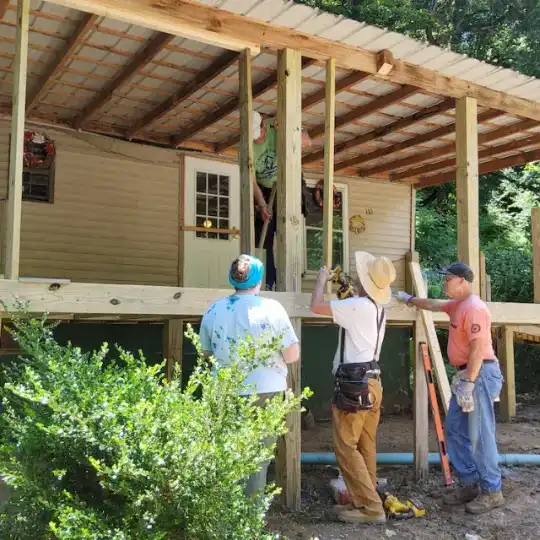
Helping Eastern Kentucky Recover from Devastating Floods
John Miller

Home sales are headed for their worst year since 1995 as ‘economic jitters’ spread from buyers to sellers, Redfin says
Robert Williams

Sausage maker Heck returns to profit after refocusing on core products
More Stories

‘A Lifeline for Our Community’: The Impact of HOME Funding in Laurel, Mississippi
Michael Johnson

Storm Ready: Helping Gulf Coast Housers Prepare for Severe Weather
Michael Miller

Jay-Z’s Times Square casino shot down by Broadway neighbors in ‘despicable display of cowardice,’ developer argues
John Davis

Pharma firm Shield Therapeutics targets cashflow positive date amid US progress
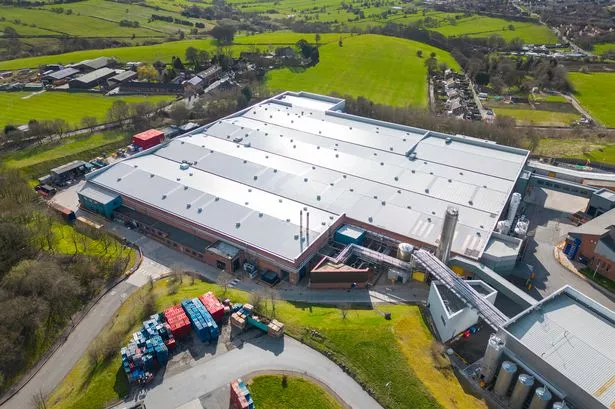
Princes seals landmark deal to produce Capri-Sun in move that will create dozens of Yorkshire jobs

Escape from New York: Impending election of a democratic socialist mayor has the wealthy fleeing to the suburbs
Emily Miller

Rescuing Ourselves: 20 Years After Hurricane Katrina
David Williams

Why boomers keep winning in the housing market as ‘investors and second-home buyers’ continue to dominate
Jane Jones

Why Don’t We Know More about Post-Disaster Homelessness?
John Jones

An Affordable Housing and Climate Victory in Sacramento
Jane Jones